A Reckoning: Baron Wormser’s Thoughts on my Book Twist
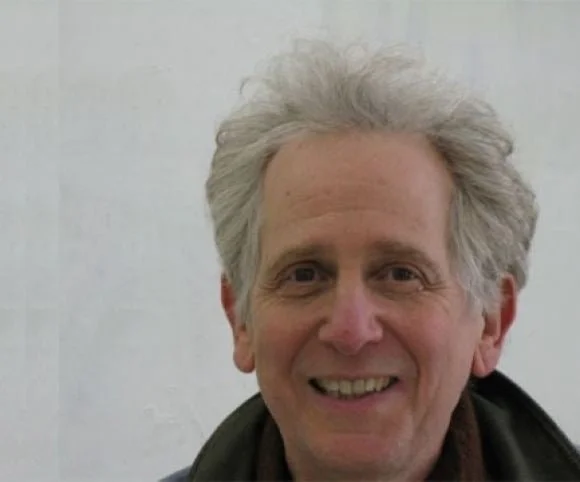
Baron when I first met him. He lived off-the-grid.
Reckoning
By Baron Wormser
I have been reading a poetry book Twist by a long-time poet-friend who is around my age. The poems largely consist of reckonings, someone confronting and evoking scenes and situations from his life. The poet is trying to come to terms with people who have mattered to him and with himself. As I read poem after poem, I began to feel the cumulative power of such reckonings, the mix of honesty and compassion, an unflinching quality yet one seasoned with an awareness of human foibles, beginning with the poet’s own missteps and misconceptions. The poet has, inevitably, his particular set of circumstances that stem from the course of his life, but the feeling remains that this could be anyone who is interested in probing what happened, not only the drama but also the moral dilemmas and missed cues. The poet is not settling scores but more like trying to understand what the scores were.
The notion of reckoning seems a crucial societal mode born of reflective memory that any person can pursue yet one these days that is barely recognized outside the precincts of literature. Indeed, the point of American life would seem to be to avoid any reckoning, to keep moving on wherever that may lead in the name of progress or whatever shibboleth is available. Politics affords the most egregious example but commerce does more than its share in promoting the newest novelty that cancels the past and offers a neverland of perpetual wanting. It’s been remarked many times that American life exhibits no real gravity, that everything can be made into a product (very much including people) and touted accordingly. Buzz is all.
Politics, however, since it is a linear endeavor – one election after another, one fiscal year after another – would seem to absolutely eschew reckonings. Speeches that blend promises, equivocations, flattery, uplift, and denunciations don’t need to consider the outcome of such words. Tomorrow will bring more speeches. The scenarios change, but the whole notion of “news” conspires to sweep today into the dustpan of yesterday – an unwanted place if there ever was one. As long as catastrophe doesn’t impinge on the political process, those in power can refuse to look in any mirrors, much less summon up the specter of their humanity. Power – an end in itself – has rarely truckled to humanity.
This is unfortunate since it is hard to avoid the feeling for anyone who cares to look around at what is happening on Earth and to Earth that a serious reckoning is at hand, one that concerns the effects of how people live on Earth. Many people recognize this, yet the nation-state politics and corporate economics that are in place worldwide, the deep reach of globalism, make any real reckoning feel like a pipe dream. Momentum – another linear fact – takes everyone from day to manufactured day. For the machines that supposedly serve humankind, there is no reckoning beyond obsolescence, which is the replacement of one machine with another. There cannot be any time out because the machines can work endlessly, and we, the people, must keep pace.
Again, to resort to the United States, a sort of pageant of fear and loathing is being enacted at this moment that aims at refuting the very notion of reckoning about anything. The populace is buried alive under assertions, but the basic facts of how our living is affecting our continued living on Earth goes by with nary a thought. The models that stem not only from poetry but from religious traditions of self-scrutiny are beside the point. Spectacle is what matters most. Given the non-stop screens full of blare and wheedle, perhaps nothing is serious. Certainly, there is nothing to apologize for. The very notion is enough to send some into conniptions. American history is one happy sleigh ride. Say no more.
Not many lives are one happy sleigh ride, and the discrepancy between my friend’s art and the desperate, recriminatory tumult of Donald Trump could not be more pronounced. What appalls and sickens me is the utter rejection of reckoning, the sense of knowing-it-all at any cost, and the inability to admit an iota of vulnerability. A mendacious, mechanical savagery is let loose on the land. Who, after all, wants to think twice? The quiet work that goes into a poem of reckoning is not going to make a perceptible splash. To look at a parent’s life and feel the anguish of failure, to look at one’s own life and feel that anguish is the last thing on many minds, even though it is very much in those minds and may, indeed, be a motive for braying ever more loudly. Mass psychosis is like that. We may think of Germany and how, for a time, they felt no reckoning could ever touch them.
My friend’s book (like my own books of poetry) will sell very modestly. For the society-at-large, which has much better things to do, it is beneath notice. I get it and so does he. Yet if there is no responsibility in any grown-up, meaningful sense, then one has to wonder what is the point of the hoopla? Apparently, many people feel there are no consequences to anything. And, indeed, for many Americans heaven is where they are bound anyway and life on Earth is an anteroom of sorts. Death comes first and life comes second. This sounds medieval but the narrow, complacent, frightful nature of American optimism is more than glad to treat eternal life as a surefire thing amid a raft of other surefire things. (See Flannery O’Connor for the definitive skewering of this mindset.) You can’t beat salvation, whether it comes through religion or money – or both. The “spiritual war” (to quote Stephen Bannon) that is being fought at this juncture is one that brandishes ultimatums – all this and none of that. The lonely conscience that goes into a mere poem is very fragile beside all this over-wrought determination: break all the mirrors so you never have to look in them, a fantasy that looks increasingly real.
